The Indian Olympiad Qualifier in Mathematics (IOQM) 2026 is India’s gateway to the prestigious International Mathematical Olympiad (IMO). This guide covers exam dates, eligibility, syllabus, registration process, and preparation tips to help students from Classes 8–12 excel in this highly competitive national-level mathematics contest.


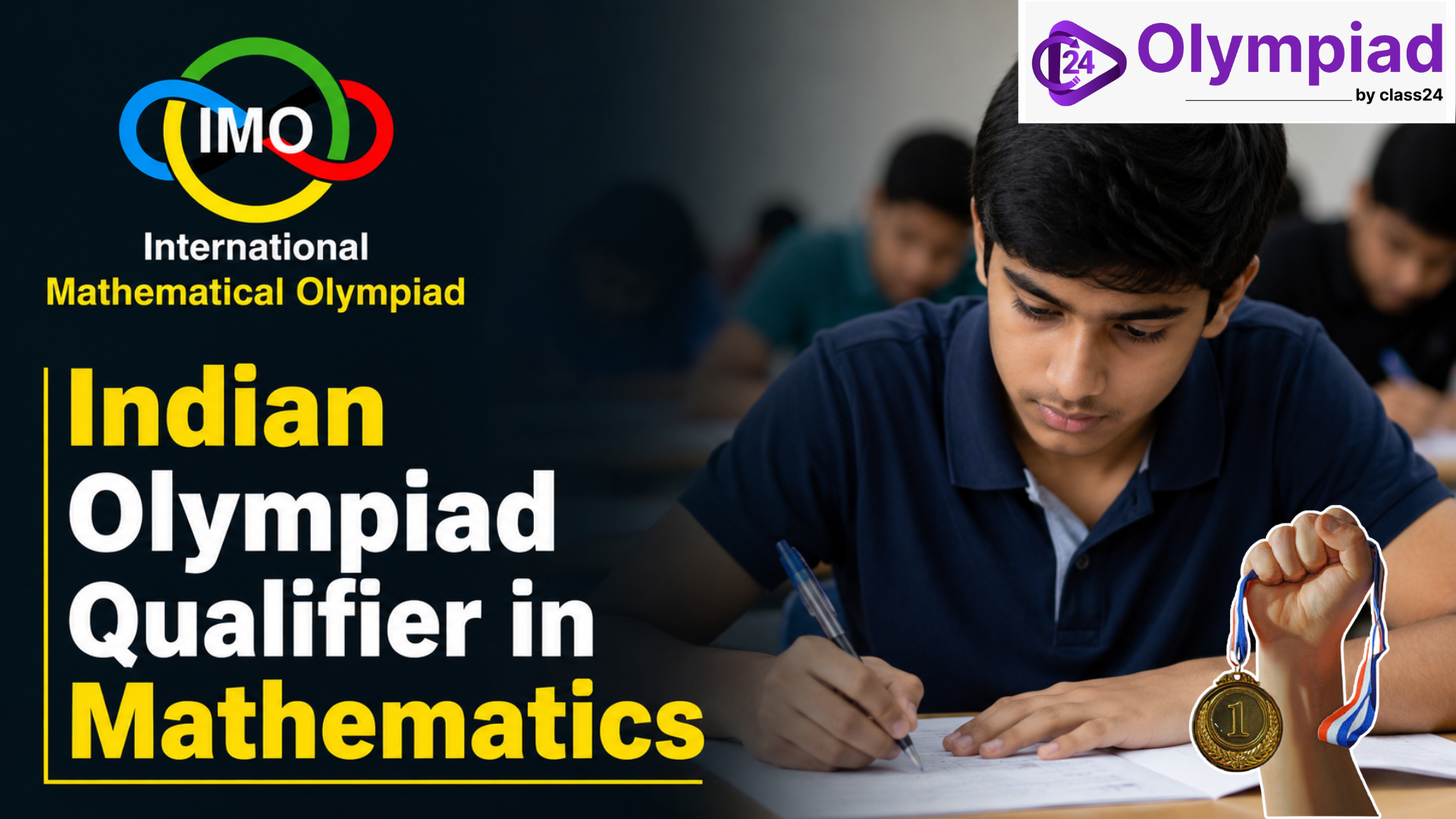
The Indian Olympiad Qualifier in Mathematics (IOQM) 2026 is one of the most important mathematics olympiads for school students in India. It is intended as a first level of the selection process for the mathematics Olympiad, which is designed to awaken the potential of talented students and prepare them for national and international level competitions.
IOQM is designed to test a student’s logical thinking, analytical ability, and problem-solving skills rather than just memorization of formulas. The exam is highly competitive and is considered a strong foundation for students aiming for advanced mathematics competitions such as RMO, INMO, and ultimately the International Mathematical Olympiad (IMO).
In this guide, you will find complete information about IOQM 2026, including the exam pattern, eligibility, syllabus, preparation strategy, and important tips.
The Indian Olympiad Qualifier in Mathematics (IOQM) 2026 is a national-level screening test to select students who possess high mathematical reasoning and problem-solving abilities. It is the first round in the mathematics olympiad progression and is used to identify students to compete in more challenging rounds like RMO. The test will largely assess conceptual knowledge and reasoning skills, not simply problem-solving using formulas.
| Exam Name | Indian Olympiad Qualifier in Mathematics (IOQM) 2026 |
|---|---|
| Level | National-level Olympiad Screening Test |
| Mode of Exam | Offline (Pen-and-Paper Based) |
| Duration | 3 Hours |
| Eligible Classes | Class 8 to Class 12 |
| Type of Questions | Numerical Answer Type (NAT) |
| Negative Marking | No |
| Purpose | Selection for the next stage of the Mathematics Olympiad (RMO) |
The eligibility criteria for IOQM 2026 are kept simple and inclusive to make it easy for students of various educational backgrounds to participate. The exam is primarily aimed at school students who enjoy mathematical and logical problem-solving. There are no complex restrictions, making it accessible to a wide range of learners.
IOQM focuses on a student’s mathematical ability and reasoning skills rather than their academic performance or background.
The IOQM 2026 exam pattern is designed to test a student’s depth of understanding and problem-solving ability rather than memory-based learning. This paper is structured in a gradual manner of increasing difficulty, starting with basic concepts and ending with problems of Olympiad level. The students must pay attention to conceptual clarity and logical thinking during the preparation process.
This exam is composed of numerical answer-type questions (not guess questions), which will be answered on the basis of a complete answer. Students should make sure to get the right answer and follow logical steps..
| Total Questions | Around 30 |
| Duration | 3 Hours |
| Question Type | Numerical Answer Type (Integer-based) |
| Negative Marking | No |
This paper has been designed to be divided into various difficulty levels, to test students within a range of skills. This makes it possible only for students with high conceptual understanding and problem-solving skills to have high achievement.
| Part 1 | Easy | Concept clarity and basic application |
| Part 2 | Medium | Application-based problem solving |
| Part 3 | High | Advanced Olympiad-level thinking |
The test is based on the ability to cope with the difficulty of successive questions in the same paper. The final section usually contains the most challenging problems and plays a key role in selection.
Unlike school exams there are no multiple-choice questions or guesswork in the IOQM. All answers must be supported with full logical reasoning and problem solving in steps.
The IOQM 2026 course syllabus does not require a specific textbook. It is rather based on the mathematics achieved in schools up to Class 10, but the questions have an advanced problem-solving level. It is more focused on logical thinking, creativity and application of concepts beyond the formula rather than on questions.
| Algebra | Polynomials, Equations, Inequalities, Functions, Sequences and Series |
| Number Theory | Divisibility, Prime Numbers, Modular Arithmetic, Diophantine Equations, Remainders |
| Geometry | Triangles, Circles, Coordinate Geometry, Angle Properties, Geometric Constructions |
| Combinatorics | Permutations and Combinations, Counting Principles, Arrangements, Logical Counting Problems |
| Trigonometry | Basic Trigonometric Identities, Applications of Trigonometry |
| Probability | Simple Probability, Logical Probability-Based Problems |
IOQM syllabus aims to evaluate depth of understanding and not surface level understanding. A question may be a mixture of two or more topics and students are expected to think across topics in one question.
For example:

A well-structured preparation strategy is crucial for performing well in IOQM 2026. The exam is more about problem-solving and conceptual clarity and hence, students have to adopt a disciplined and topic-oriented approach instead of a random approach to practice. Inconsistency and frequent examination of errors are important to improvement.
This is the key to IOQM preparation. Advanced Olympiad questions are hard to solve if the foundations are not solid.
Focus on:
Having a solid foundation makes it easier to grasp more complex problems and to be more accurate when answering higher-level questions.
IOQM is not a memorization-based exam; it is a thinking-based exam. It is more important to understand the concepts than to learn the formulas.
Focus on:
This method enhances flexibility in problem solving and develops mathematical thinking skills. Outline a topic-wise preparation plan.
A well-structured study plan helps to systematically cover all important areas and eliminates confusion during preparation.
Suggested study breakdown:
A step-by-step method to help prepare for all of the major topics in a balanced way.
Regular practice is the most important factor in IOQM success. Students should be able to solve problems at a higher level, beyond what is found in the textbook.
Focus on:
Mock tests are crucial to practice under timed conditions and to boost performance during a real exam.
Focus on:
Following each test, it is equally vital to review the errors and make sure they don't happen again.
Success in IOQM depends on strong mental and analytical abilities. Students should focus on developing the following skills:
IOQM evaluates how well a student can think rather than how quickly they can calculate.
Many students fail in IOQM not because the test is difficult but because they have gone on the wrong path of studying for the test. Because of the conceptual understanding and problem-solving skills tested, any small error in strategy can greatly decrease performance on the IOQM.
Overdependence on formulas
Ignoring geometry completely or partially
Insufficient practice
Avoiding challenging problems
No proper revision plan
Poor time management abilities
Note: Preparation in IOQM is much better achieved by regular and proper preparation than by irregular or intensive study sessions.
The IOQM 2026 exam is not just a qualifying test but a major step in developing advanced mathematical thinking. It bridges the gap from elementary school math to Olympiad problem solving.
IOQM is considered a "foundation-level" examination which directly affects a student's long-term mathematical thinking skills and readiness for some of the most difficult academic competitions.
A well-planned sequence of preparation enables students to learn key areas in a balanced manner and develop problem-solving skills incrementally. Instead of studying randomly, a phase-wise plan ensures better understanding and revision of concepts required for IOQM 2026.
| Phase 1 | Basics + Number Theory |
| Phase 2 | Algebra + Practice |
| Phase 3 | Geometry + Problem Solving |
| Phase 4 | Combinatorics + Revision |
| Phase 5 | Mock Tests + Final Revision |
Phase 1: Basics + Number Theory
Phase 2: Algebra + Practice
Phase 3: Geometry + Problem Solving
Phase 4: Combinatorics + Revision
Phase 5: Mock Tests + Final Revision
Consistent practice is key for IOQM 2026. Students need to aim for small changes throughout the day rather than frequent study sessions.
Note: A disciplined and consistent approach is the most effective way to succeed in IOQM 2026.
Students should work on solidifying their ideas and establishing a regular study schedule as exam time nears. Success in IOQM depends more on logical thinking and regular practice than on last-minute efforts.
The secret to excelling at IOQM 2026 relies on a mix of understanding, consistent practice, and strategic revision.
The Indian Olympiad Qualifier in Mathematics (IOQM) 2026 is not just a competitive exam but a journey that develops deep mathematical thinking and problem-solving ability. If the strategy of preparing is followed, the conceptual understanding is good, and with regular efforts, any student of Classes 8 to 12 can get good marks in IOQM 2026. This exam will not only provide a pathway to national and international mathematics competitions but also equip students with a solid foundation for success in their future academic pursuits.

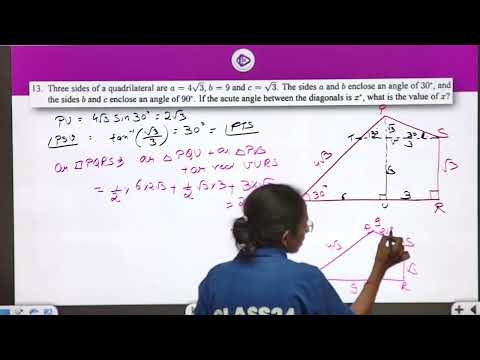
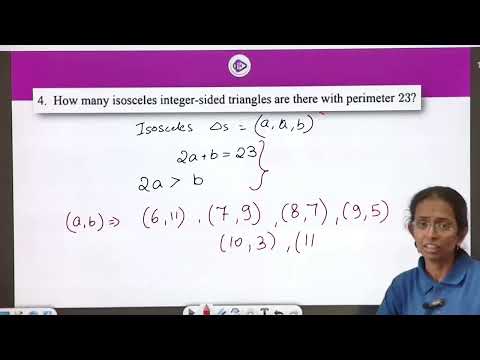


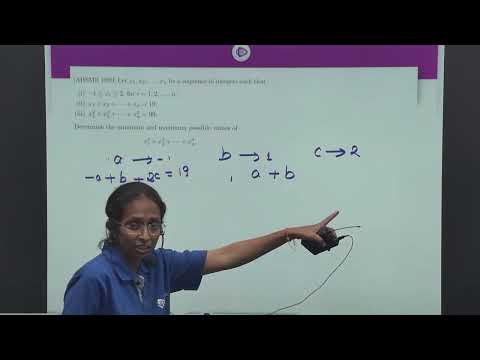
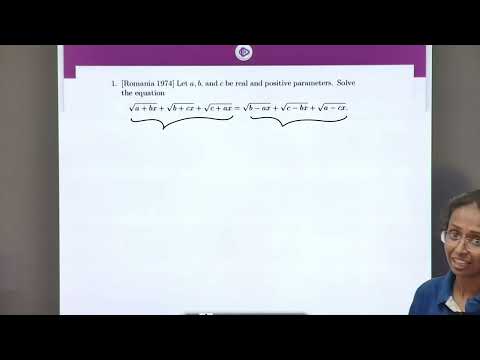


Boost your IOQM preparation with these high-quality, downloadable materials — absolutely free!
| 📄 Resource Name | 📝 Description | 📥 Download |
|---|---|---|
| Algebra Chapter Practice Sheet from Book | Get Algebra Chapter Practice Worksheet which will help you gauge your performance and help you improve efficiency. This is just a part of the full book available with us. | Download PDF |
| IOQM Previous Year Paper | Official Previous Years Paper with real exam-level questions. | Download PDF |
🆓 More free PDFs coming soon – Stay connected!
Pick a level and filter by type to instantly find the right material.
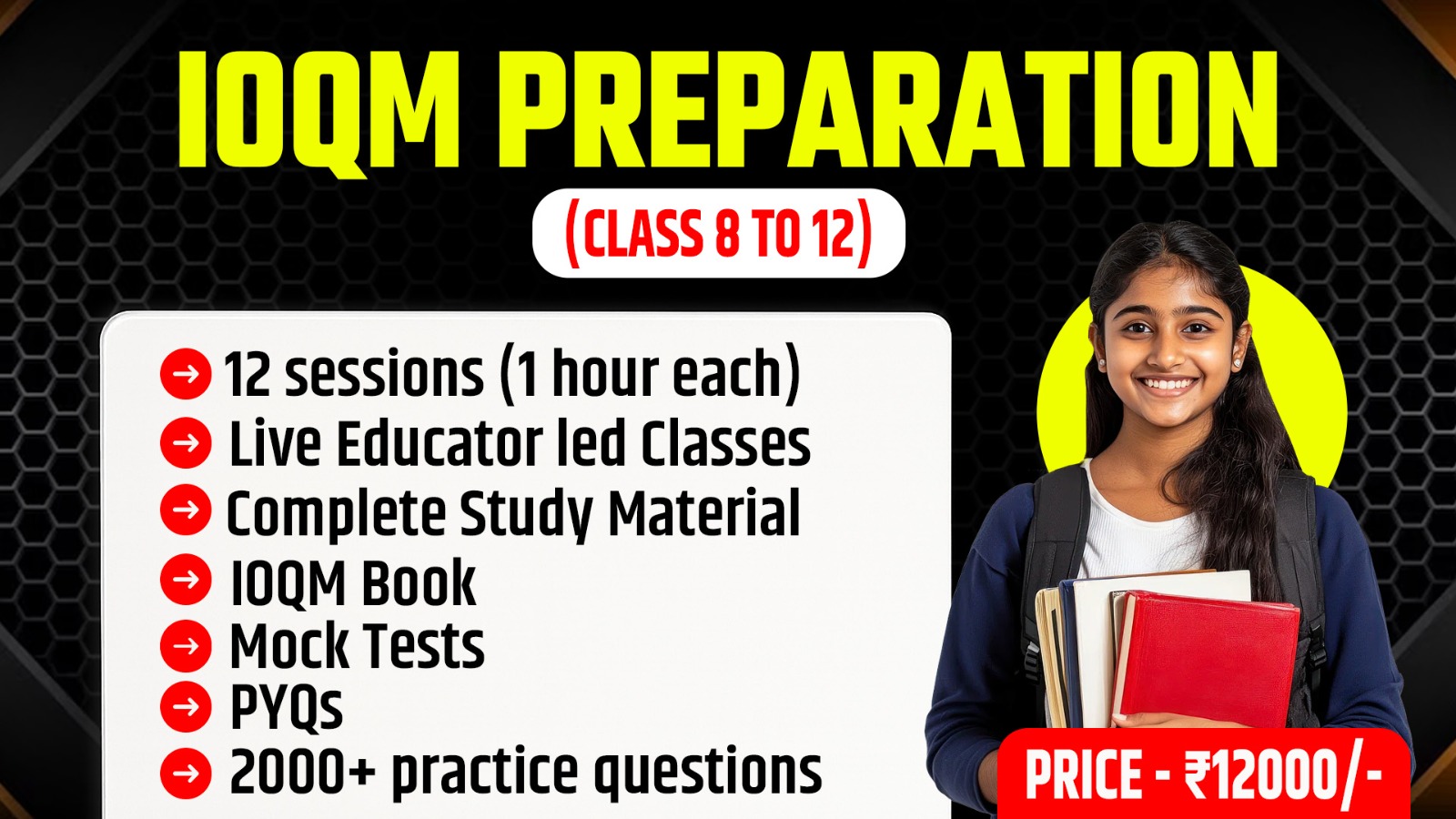
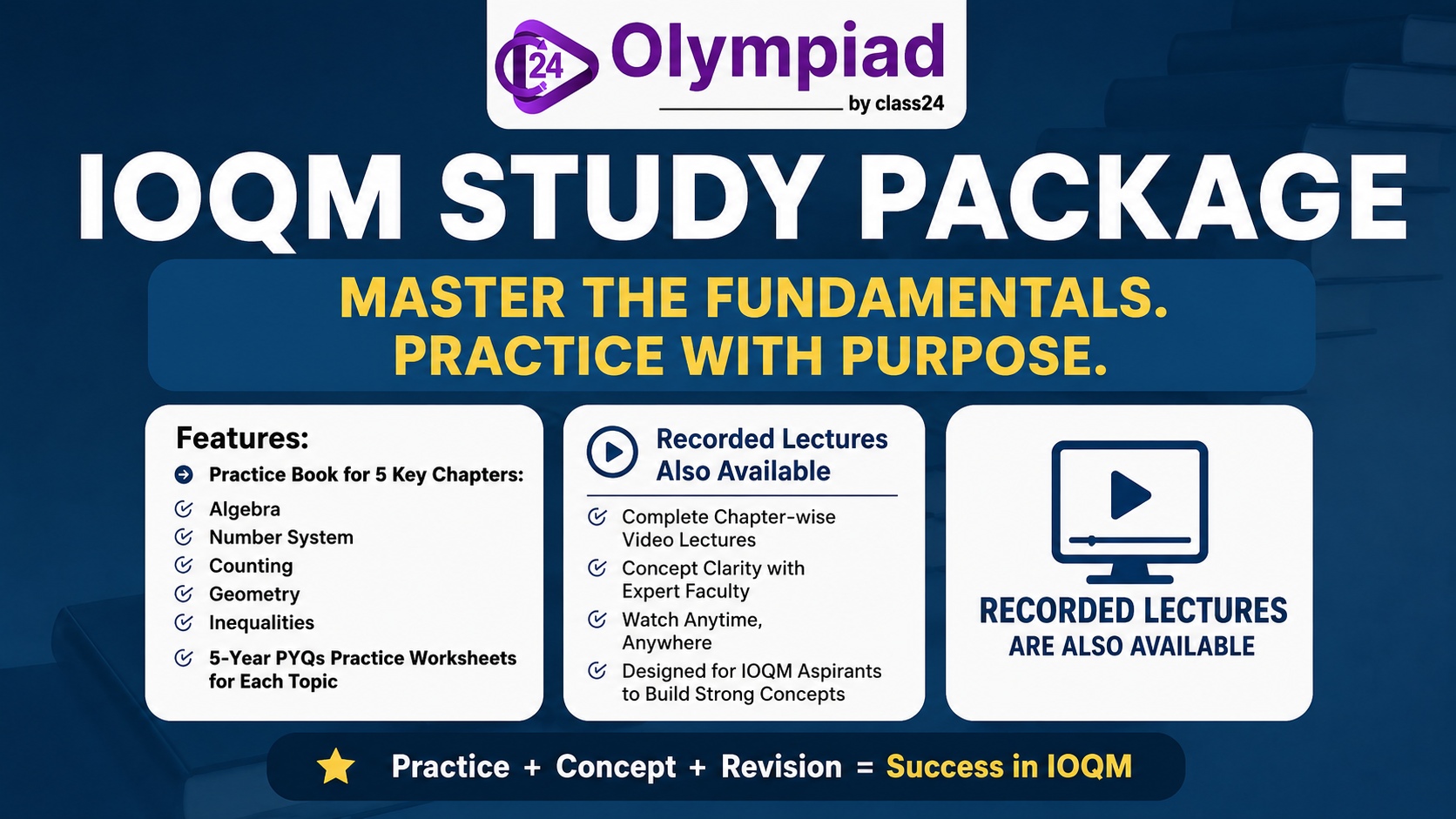
Prepare for Olympiad exams anytime, anywhere with personalized lessons, real-time progress tracking, and expert guidance in Science, Maths, and Informatics. Download now and start mastering your Olympiad journey!







We'd love to hear from you
Leave a Comment